

From Mars to Berlin: designing drones faster and teaming with them safely
Written by Dr Christopher Baker, Queen’s University Belfast.
In April, Queen’s University Belfast (QUB) took its research on drones and human-AI teaming to Berlin for NAT’26, the fifth Neuroadaptive Technology Conference, held from 22 to 24 April 2026. Billed as Europe’s first event dedicated to neuroadaptive AI, NAT’26 brought together around 120 researchers, developers and policymakers from nine countries. Our contribution joined two strands of work with a shared goal: drones that are quicker to design and manufacture, and safer to operate alongside AI.
The first strand comes from D2N+ Challenge Case Study 1, which our interdisciplinary team won. The team, Christopher Baker (QUB), Juan Li (King’s College London), Ryan Murphy (Imperial College London), Johannes Norheim (University of Strathclyde) and Gokul Vasantha (Edinburgh Napier University), set out to accelerate drone design for challenging environments. Our case study was NASA JPL’s Ingenuity Mars Helicopter, which had to weigh under 1.8 kg and fly in Mars’s thin atmosphere.
Today, drone design relies on manual iteration between design and simulation, and requirements are often not tested until a physical prototype exists. Our approach verifies requirements in simulation at every stage. The team combined algorithmic shape and topology optimisation, which generates aerofoils and wing spars from performance goals rather than preset geometry, with large language models (LLMs) that turn natural-language requirements into simulation tests. A patent knowledge system mapped 6,700 patent abstracts onto Ingenuity’s sub-systems, and a machine-learning accelerated simulator sped up evaluation.
QUB built the high-fidelity Ingenuity surrogate in NVIDIA Isaac Sim, on the Omniverse platform, using the Pegasus multirotor framework. Under simulated Martian gravity, a custom flight controller stabilises Ingenuity’s inherently unstable coaxial rotor design and flies autonomous missions between waypoints, from take-off to hover, traverse and landing. Telemetry recorded at 60 Hz is analysed by a pair of AI agents, a flight data analyst and an aerospace dynamics engineer, which recommend controller changes and close the loop between simulation and redesign. For manufacturers, the payoff is fewer costly physical prototypes and faster iteration from requirement to build.
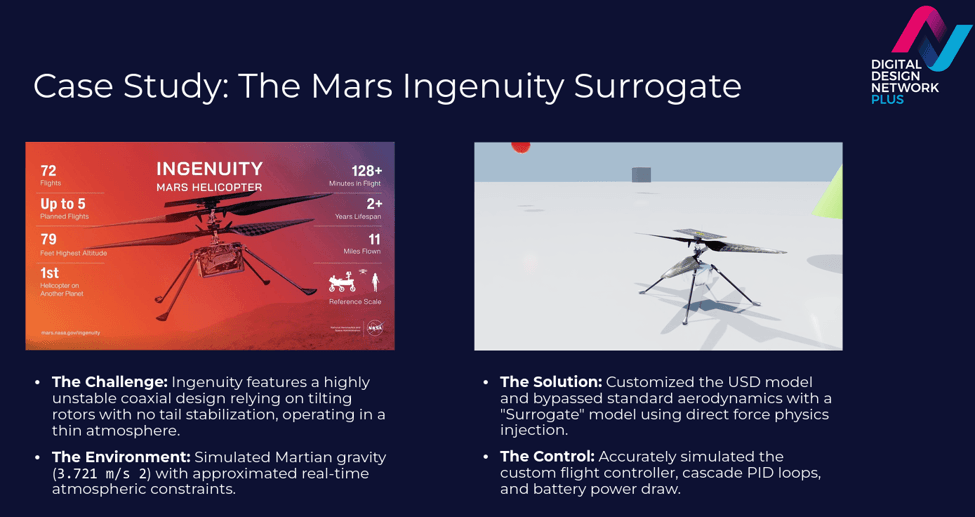
Fig. 1 Omniverse simulation of Ingenuity with programmed mission profiles
The second strand was our NAT’26 talk, Integrating EEG and Behavioral Metrics via cBCI to Enhance Team Performance and Resilience to AI Deception, which opened the conference’s first scientific session. Teams monitored a virtual reality drone surveillance task under high cognitive workload while an AI assistant sometimes gave deliberately wrong advice. A collaborative brain-computer interface (cBCI), combining each person’s EEG-derived confidence with their behavioural responses, let teams outperform their best individual member. When the AI misled them, people’s choices followed it, yet their brain responses still registered the truth. Across a simulation of 11.7 million team decisions, relying on these neural signals held accuracy at 68.3 per cent, while conventional majority voting fell to 42.6 per cent.

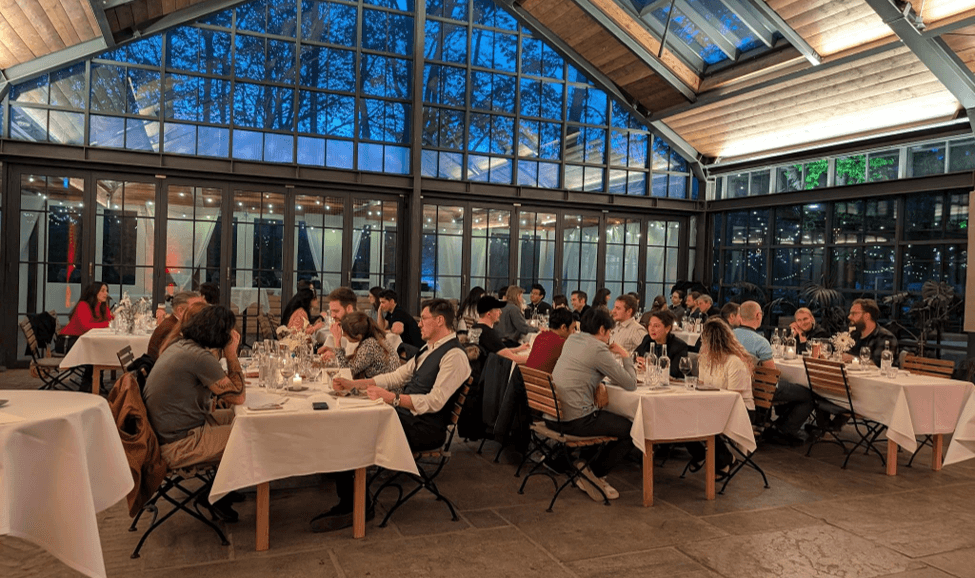
Fig. 2-3 Nat’26 Conference Dining Venue (Zoologisher Garten Berlin)
Taken together, the two strands address both ends of a drone’s life. Virtual design and verification shorten the route to a manufacturable aircraft, while neuroadaptive teaming protects the people who operate it from flawed automated guidance. Both rely on the same high-fidelity virtual environments. These themes carried into conversations beyond the conference sessions, where we discussed QUB and UK-funded drone research with representatives from Fraunhofer-Gesellschaft and the Bundeswehr.
The work continues to travel. This week, at the invitation of team member Gokul Vasantha, through Professor Jonathan Corney of the University of Edinburgh, I spoke as invited speaker at the Institution of Mechanical Engineers (IMechE 13/10/26). We look forward to building on these connections as the D2N+ challenge work develops.

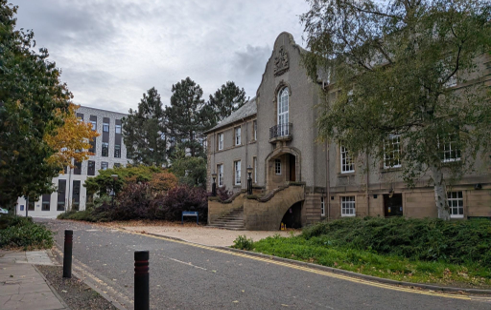
Fig 4-5 View from Guest Lecture Theatre, Tour of Edinburgh University Historic King’s Buildings
Find out more about the D2N+ challenges at digitaldesignnetwork.org/challenges and the NAT’26 programme at neuroadaptive.org/conference/2026 Institute of Mechanical Engineers https://www.imeche.org/