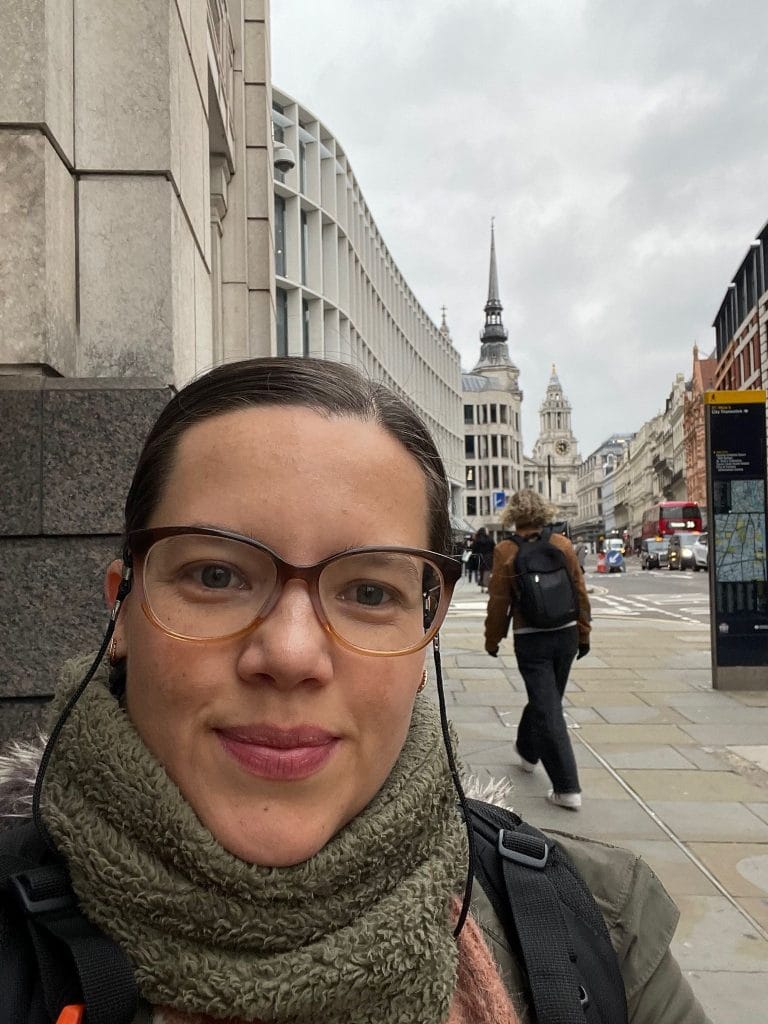
Written by Dr Yuri Mejia, University of Sheffield
It is the morning of the second day of the Society for Studies in Organizing Healthcare (SHOC) Early Career Researcher Workshop in London. After a full day at King’s Business School (Bush House), I am still thinking over many new ideas on healthcare systems, organisational behaviour, and multidisciplinary practice.
The two-day event, hosted by King’s College London and Bayes Business School, brings together around 30 early career researchers, academics, and healthcare practice leaders to discuss management, policy, and organisational challenges in health systems. As an engineer working in digital manufacturing, joining a healthcare organisational research workshop takes me out of my comfort zone, and that is exactly why I wanted to be here.
Reflecting on Day 1: From Sickness to Prevention
The day opened with a keynote from Sir David Sloman (former NHS England Chief Operating Officer and CEO of several NHS Trusts), who shared lessons from over 40 years of NHS leadership.
What I liked most was his enthusiasm after four decades in the health service. As engineers or researchers, we often view healthcare as users or system evaluators. Sir David described a shift in focus that is also relevant to how we approach system design:
- From reactive care to prevention:
- moving healthcare away from only treating acute illness and towards maintaining population health and long-term wellbeing.
- Digital integration:
- using digital tools to help people take ownership of their health but also integrating the tools into the NHS to improve reach.
- Local communities:
- building health resilience within local networks, rather than relying only on hospital-centred models.
The rest of Day 1 followed this theme. ECRs gave short Pecha Kucha presentations on their work, and Prof. Jenny Shand (UCL) gave an academic keynote on building applied health research programmes with impact. She spoke about moving quickly to implementation and checking the impact of our research, which felt very timely. The afternoon ended with a session with NHS strategy directors, clinical leads, and patient groups (including representatives from King’s Health Partners, Barts Health NHS Trust, and the End Aids Action Group), looking at how to design research that addresses real frontline problems.
Stepping Outside Engineering
As engineers, it is easy to stay within our own domain of optimisation models, algorithms, software, and physical constraints. But good design often happens where technical solutions meet real organisations and human behaviour.
Looking back on the second half of 2026, a recurring theme in my work has been priorities, and how we align our research with wider system and human needs. In recent months, I have tried to take part in a range of multidisciplinary events:
- The Sustainability Symposium
- The Dementia Annual Meeting
- AI for Research
- The SHOC Healthcare Workshop
Each has its own vocabulary, methods, and priorities. In healthcare, organisational researchers and clinicians focus on human-centred care, policy implementation, and operational constraints. As the engineer in the room, I am trying to listen, translate, and find ways that technical design frameworks can support complex socio-technical systems without oversimplifying the human side.
Working Across Disciplinary Boundaries
One question that came up throughout the sessions is very close to our work in D2N+: how do we keep the rigour of our own discipline while staying accountable to the needs of the wider system?
To paraphrase Prof. Jenny Shand from yesterday’s second keynote, we need to learn to lean on each other.
Our toolkit as engineers is built on quantitative modelling and system optimisation, but design cannot be separated from its wider context:
- Environmental and planetary health:
- we have a responsibility to build sustainability into our technical work, working with environmental experts so that our designs
- protect shared ecosystems.
- Human and health factors:
- we design for people, with physical limits, health needs, and social structures. Designing systems that protect the people in them, whether healthcare workers, operators, or end users, matters as much as mechanical efficiency.
Looking Ahead: D2N+ Activities and Upcoming Workshops
As we approach the end of the year, several D2N+ activities are moving forward:
- Case studies:
- we are completing Case Study 2 (system redesign for remanufacturing processes) and starting Case Study 3, where human and organisational factors will be central.
- Sheffield Digital Design Workshop:
- later this term, we will host a Digital Design Workshop in Sheffield, bringing together technical and systems design approaches.
Walking into a room as an outsider can feel daunting at first, but that is often where unexpected connections happen. It also reinforces an important lesson for digital design: systems, health, and engineering are closely connected, and our design models need to reflect that.